Repipe your home in PEX or copper, done right.
Failing CPVC, polybutylene, or corroded galvanized pipe in a Palm Beach County home is more than a pressure problem — it can affect your insurance coverage and your family’s water quality. We replace it all in PEX or copper: licensed, permitted, and on a schedule that lets you sleep in your own home every night.
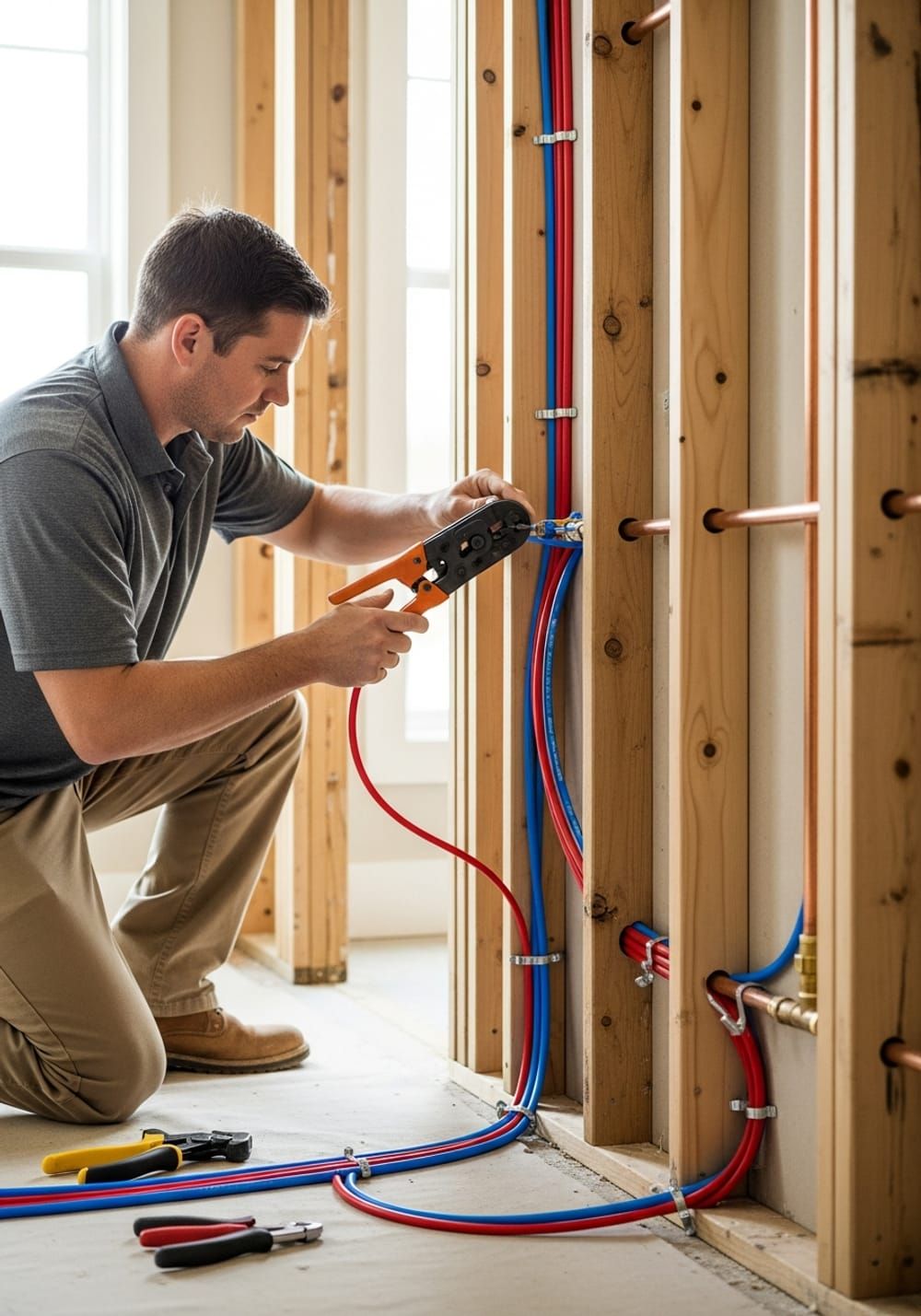
When a whole-home repipe is the right call
A whole-home repipe replaces every supply line in a house — the pipes that deliver hot and cold water to every sink, shower, toilet, dishwasher, and hose bib — with new material. In Palm Beach County, three pipe types account for almost every repipe job we do, and each fails in its own way.
Polybutylene (grey "poly") was used in millions of Florida homes from the late 1970s to 1995. Class-action litigation established that the fittings are prone to oxidative degradation from chlorinated municipal water, and after the settlement the material was withdrawn from the market. Today, most Florida homeowners’ insurers refuse to write or renew a policy on a home that still has poly in service — making it not just a plumbing risk but an insurance and resale problem. If your home was built between 1978 and 1995 and you have never repiped, there is a meaningful chance you have grey poly.
CPVC was the code-compliant poly replacement through the 1990s and 2000s. It performs reasonably well when new, but Florida’s chloraminated water supply and the UV heat in South Florida attics dry out and embrittle the plastic over 20–25 years. Brittle CPVC cracks under normal water-hammer pressure — behind walls, in the slab, wherever the pipe runs — and the leak is often hidden until visible water damage appears.
Galvanized steel corrodes from the inside out in Palm Beach County’s hard water. As the zinc lining oxidizes, scale builds up on the interior walls of the pipe and progressively narrows the bore — reducing water pressure 30–50% over 30–40 years and eventually leaching rust into your fixtures and water heater. There is no cleaning or relining galvanized in place; once the bore is severely restricted, replacement is the only fix.
This page explains what a repipe involves, why PEX has become the standard material for Palm Beach County homes, how the job is scheduled, and what it costs. We are a licensed Florida plumbing contractor and pull permits on every repipe. When you are ready for a real price, we visit the home and put it in writing.
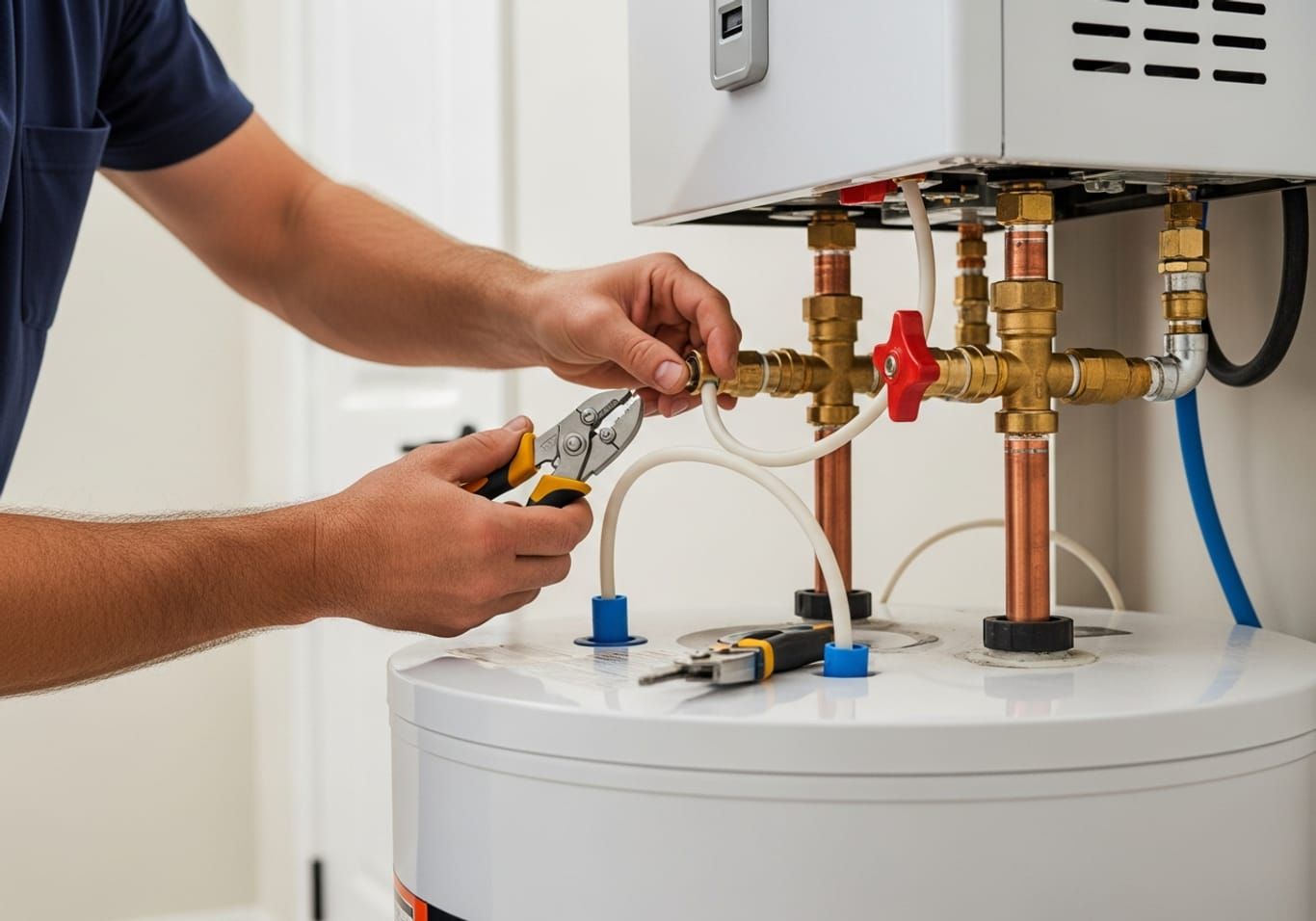
From old pipe to new — what the job actually touches
A repipe is not just swapping one pipe for another — it’s replacing the whole supply network, from the main shutoff to the last fixture, with new material and new isolation valves at every connection.
PEX vs. copper vs. what you’re replacing
Both PEX and copper are excellent pipe materials — each has a place. What you are replacing (galvanized, poly, or CPVC) has run its course.
| What matters | PEX | Copper | Galvanized / Poly / CPVC |
|---|---|---|---|
| Expected lifespan | ✓ 50+ years | ✓ 50+ years | ✗ 20–40 yrs (already failing) |
| FL hard-water resistance | ✓ Excellent — resists scale | ✓ Good — no interior oxidation | ✗ Poor — corrodes & scales from inside |
| Chloramine / chlorine resistance | ✓ Inert to disinfectants | ✓ Unaffected | ✗ CPVC & poly degrade over time |
| Flexibility & drywall access | ✓ Threads through walls — minimal patching | — Rigid — more access cuts needed | — N/A (being removed) |
| FL insurer acceptance | ✓ Accepted | ✓ Accepted | ✗ Poly routinely refused; CPVC flagged |
| Antimicrobial surface | — Neutral | ✓ Naturally antimicrobial | — Variable |
| Material cost | $ — most affordable | $$ — mid-range | — (replacing, not installing) |
If cost is the primary driver, PEX is almost always the right call for a Palm Beach County home. If you are in a historic home, want exposed pipe in a utility room, or are pairing the repipe with a premium renovation, copper is the material the plumbing code was written around and holds up just as long. We will tell you honestly which fits your situation at your free estimate.
Hard water, insurer pressure, and why the pipe material matters in Palm Beach County
Palm Beach County’s water chemistry, Florida’s building code, and your homeowners insurer all have opinions about the pipe inside your walls. A licensed local plumber who knows all three is who you want running the repipe.
PEX home-run vs. copper branch — and where each goes
Not all repipes are built the same way, and the right system for your home depends on how it was originally built, how much attic access you have, and what you value in a finished system.
A PEX home-run manifold system runs individual PEX lines directly from a central manifold — typically located in a utility closet or garage — to each fixture in the home. Because PEX is flexible, each line threads through walls and ceiling cavities with minimal drywall cutting, making it the fastest and least invasive approach for most Palm Beach County homes. The manifold also gives you individual zone shutoffs: if the master bath has a leak, you shut off that zone at the manifold without cutting water to the kitchen or guest bath. On hard-water supply, PEX’s smooth interior bore resists scale buildup that would restrict copper over decades.
A copper branch system runs main trunk lines in copper — typically through an accessible attic or utility chase — with branch lines dropping to individual fixture groups. Copper is the material Florida’s plumbing code was written around; it is naturally antimicrobial, has a 50+ year track record in the state, and is the preferred choice for exposed pipe in laundry rooms, utility spaces, and homes where the visible plumbing is part of the aesthetic. The trade-off is that rigid copper requires more access cuts in drywall and more labour in tight spaces.
On most Palm Beach County homes, PEX is the correct practical choice for a full repipe. On a historic or high-end home where copper is specified by an architect, or where exposed pipe is part of the design, copper is exactly what the code anticipated. We install both — and we will tell you at the estimate which system makes the most sense for your structure, your water source, and your budget.
Wondering what a repipe costs for your home? Enter your square footage and pipe type in our free estimator for a realistic ballpark before you call.
Try the Plumbing Cost EstimatorTimeline and cost: what a Palm Beach County repipe actually involves
Most whole-home repipes on single-story Palm Beach County homes take two to three days. Day one is rough-in: we run all new pipe through the walls, attic, and crawl spaces, connect to the main shutoff and manifold (if PEX), and stub out at every fixture. Day two is connections, trim-out, and pressure test — every fitting is charged to full line pressure and checked before we leave. A short follow-up visit handles any drywall patch coordination and the final county inspection, which we schedule and attend. Water is shut off during active work but restored each evening so you can use your home overnight.
Two-story homes, slab-built homes with limited attic access, or homes with complex fixture counts may add a day. We scope this honestly at the estimate — if your home is going to be on the longer end, you will know before you commit.
As for cost: the main variables are home size (square footage and number of fixtures), pipe material choice (PEX is typically less expensive in both material and labour than copper), the degree of drywall access required, and whether the existing system includes any slab penetrations that need special handling. We do not quote repipes over the phone, because the access situation inside your walls is the single biggest cost driver — and we cannot see it without visiting the home. Our plumbing cost estimator gives you a ballpark range by home size and material; a free on-site estimate gives you the exact written number.
What you can expect from a Palm Beach County repipe
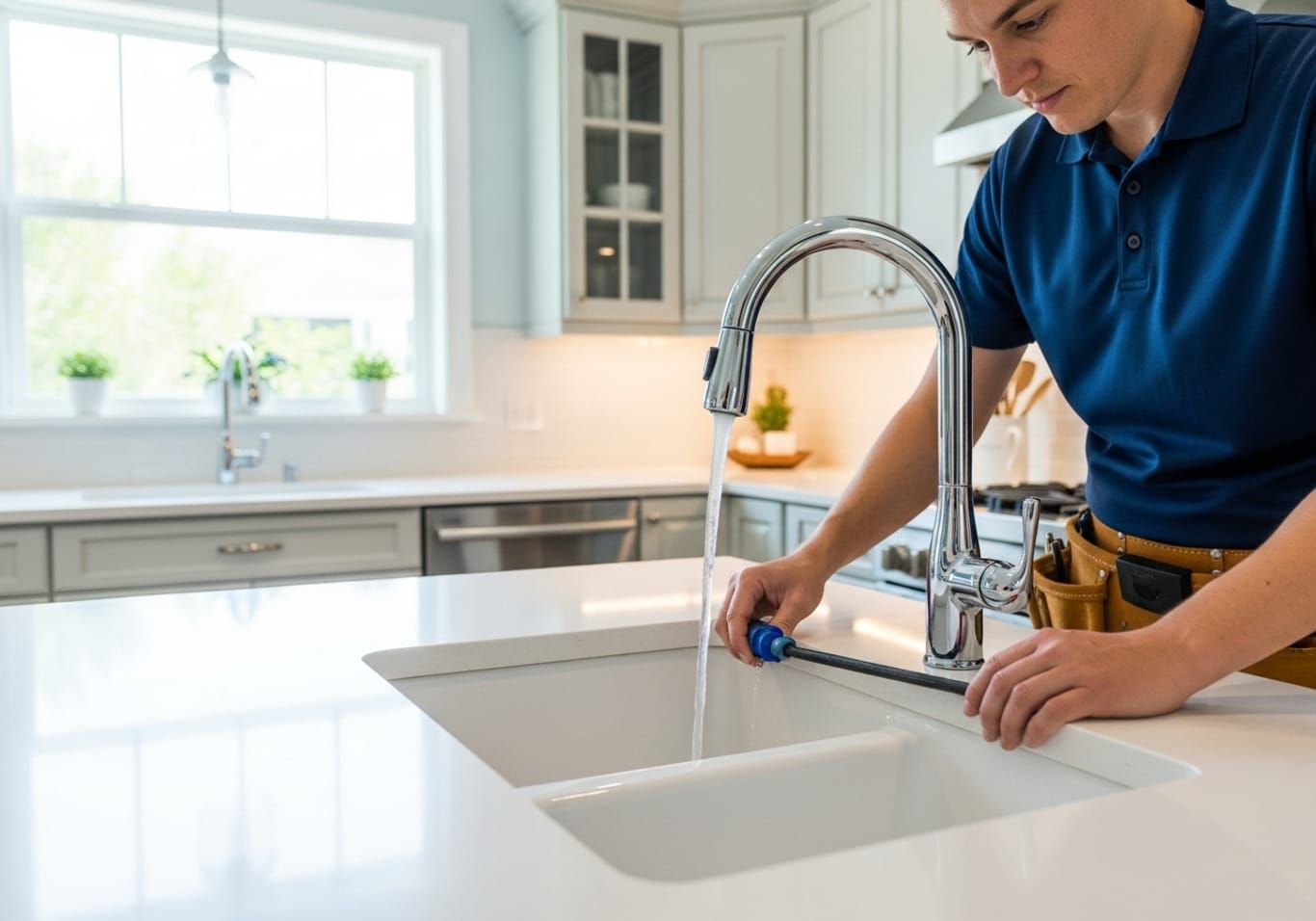
Full pressure, clean water, no more worrying about the pipe
The week a repipe is done, the rust-colored water clears. The pressure comes back. The insurer stops asking questions. A whole-home repipe is one of the few jobs that removes an ongoing anxiety from a homeowner’s life entirely — because the new pipe, installed correctly and documented under permit, simply doesn’t need to be thought about again for 50 years.
More than new pipe: the complete plumbing upgrade
A repipe is the best time to address the rest of the plumbing system, because access is already open and the crew is already in the house. The two most common additions we pair with a repipe in Palm Beach County:
- Water heater replacement — a 15-year-old tank in a home with failing supply lines is itself near the end of its life. Replacing the water heater on the same job — or upgrading to a tankless on-demand unit while the permits are already pulled — saves a second mobilization and a second set of permits.
- Electronic leak detection — before the walls close, we pressure-test every new line. If there are any active leaks in the structure from the old system that the new pipe doesn’t address (slab leaks, drain issues), leak detection before the close-up finds them while access is still open.
If you have a 24/7 emergency right now — a burst poly fitting, a galvanized line that has fully failed, or active water damage — our 24/7 emergency plumbing service is available around the clock across all 11 communities we serve in Palm Beach County. Emergency stabilization and a repipe estimate can happen on the same visit.
Ready to stop worrying about the pipe in your walls? Use the plumbing cost estimator for a range, then book a free on-site estimate for the exact written price.
Whole-home repipe FAQs
What is a whole-home repipe, and when does my house need one?
How long does a repipe take, and will I be without water the whole time?
PEX or copper — which is better for a Palm Beach County home?
Does Florida’s hard water damage pipes, and is that why mine are failing?
How much does a whole-home repipe cost in Palm Beach County?
Whole-home repipe across Palm Beach County
- Palm Beach Whole-home repipe
- West Palm Beach Whole-home repipe
- Palm Beach Gardens Whole-home repipe
- Jupiter Whole-home repipe
- Boca Raton Whole-home repipe
- Wellington Whole-home repipe
- Delray Beach Whole-home repipe
- Boynton Beach Whole-home repipe
- Lake Worth Beach Whole-home repipe
- Royal Palm Beach Whole-home repipe
- Singer Island Whole-home repipe
Ready to replace the pipe — all of it?
Tell us about your home and a licensed Palm Beach County plumber will walk through the system, explain what pipe you have and what it’s doing, and give you a clear written price for a PEX or copper repipe — no pressure, no call center.